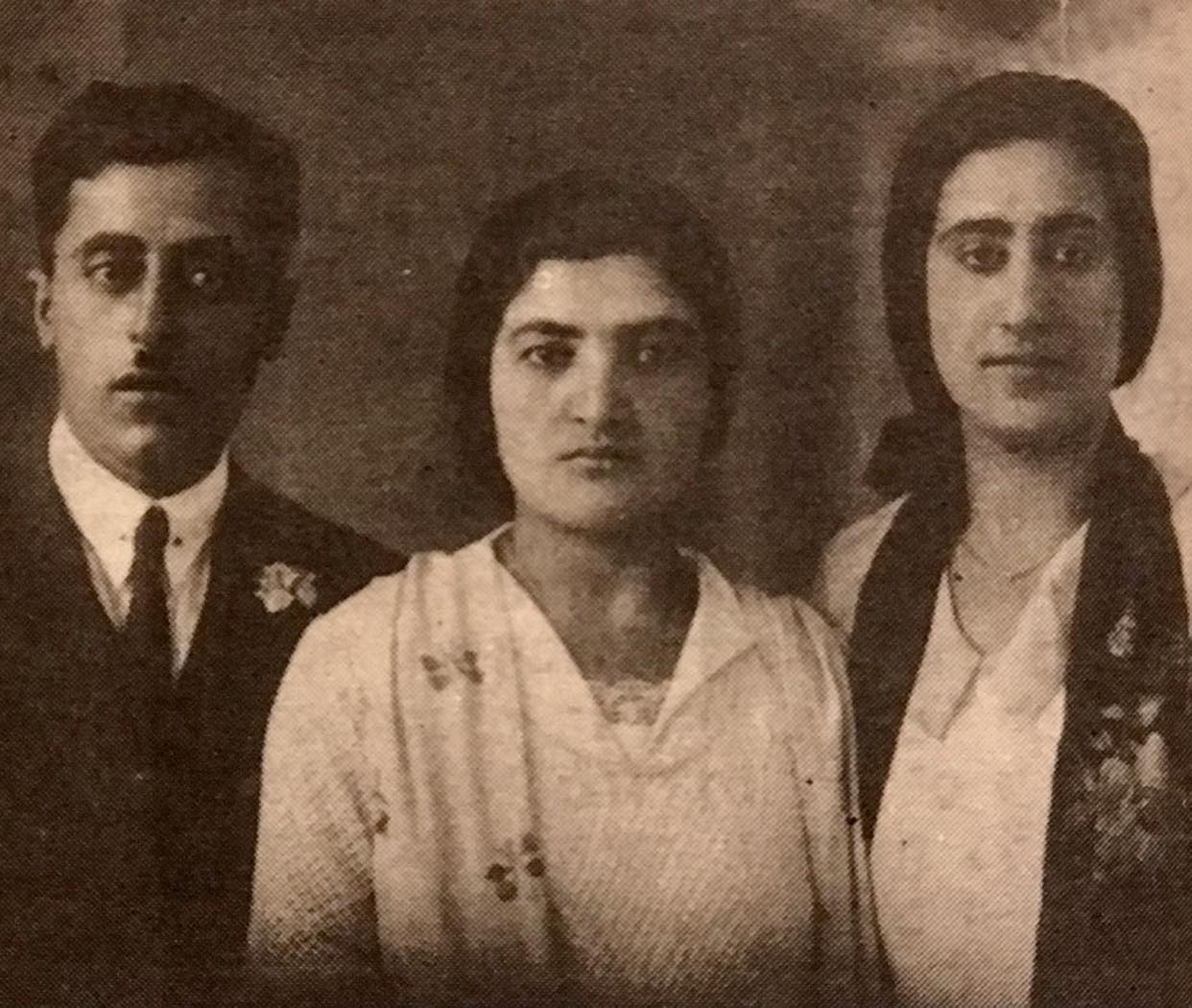
Forgotten Jewish Routes: From the Caucasus to Southeast Asia
Journey beyond familiar narratives in Forgotten Jewish Routes: From the Caucasus to Southeast Asia, a four-part live course exploring overlooked Jewish communities across Georgia, Armenia, Central Asia, India, Oman, and Malaysia. Drawing on firsthand field research and personal encounters, the course brings to life the stories, histories, and cultural legacies of Jewish worlds that are rarely told. Through vivid storytelling and historical insight, participants will uncover the rich diversity of Jewish experience across regions often left off the map.
🗓 September 2 / 3 / 6 / 8, 2026
🕘 09:00 EST New York | 15:00 CET Berlin
📍 Live on Zoom, each lasting 90 minutes | Limited spots

Instructor
Lasha Shakulashvili
Course Fee
€65.00
Course Sessions
The Caucasus: Georgia & Armenia
Through field research and historical analysis, this session examines Jewish life in the Caucasus, with a focus on Georgia and Armenia. It explores questions of identity, coexistence, and cultural continuity across diverse communities. In Georgia, particular attention is given to the linguistic landscape of Jewish life in Tbilisi, including Georgian, Judeo-Georgian, Juhuri, Hebrew, Russian, and Yiddish, as well as to lesser-known groups such as the Krymchak and Lakhlukhi Jews. In Armenia, the session considers overlooked histories, including the Crown Rabbi, Subbotnik communities, and the presence of Ashkenazi and Persian Jews, offering a broader perspective on regional transformations.
Across the Indian Ocean: Oman & India
This session examines Jewish communities of South Asia and the Arabian Peninsula, drawing on fieldwork and archival research to explore patterns of migration, trade, and cultural exchange. In India, it focuses on the Paradesi, Bene Israel, Cochini, and Baghdadi communities, analyzing their social organization, cultural practices, and adaptation within local contexts. In Oman, the session considers the legacy of Baghdadi and Persian Jews, with particular attention to the region’s only remaining Jewish cemetery as evidence of historical presence and transformation.
Central Asia: Uzbekistan & Kyrgyzstan
This session explores Jewish communities of Central Asia, from Bukhara to the Tian Shan mountains, with attention to migration, settlement, and cultural exchange. It traces how Jewish groups came to inhabit the Tian Shan region and their role within local societies, including their contribution to the emerging social fabric of the Kyrgyz Republic. In Bukhara, the session explores the distinctive material culture of Bukharan Jews, Baghdadi-style doors, courtyard houses, and interiors adorned with Hebrew inscriptions and oriental motifs, as expressions of identity, memory, and belonging.
Southeast Asia: Malaysia and the Edges of Memory
This concluding session sheds light on Jewish presence in Southeast Asia, with a focus on Malaysia and sites such as Penang, tracing the emergence, development, and decline of local communities. It analyzes the diverse composition of these groups, including Ottoman, Baghdadi, Indian, Polish, Austrian, English, and Romanian Jews, and their roles within colonial and commercial networks, as well as their connections to Singapore. Particular attention is given to the impact of the World Wars and shifting political dynamics, situating these communities within broader processes of transformation, disappearance, and historical memory.
What You'll Receive
Live Sessions
Interactive live sessions via Zoom with your instructor and fellow students
Recordings
Access to all session recordings
Community
A space to connect, reflect, and discuss with other learners
Join the Community
Receive stories, tour announcements, and course updates. No spam—only history worth remembering.